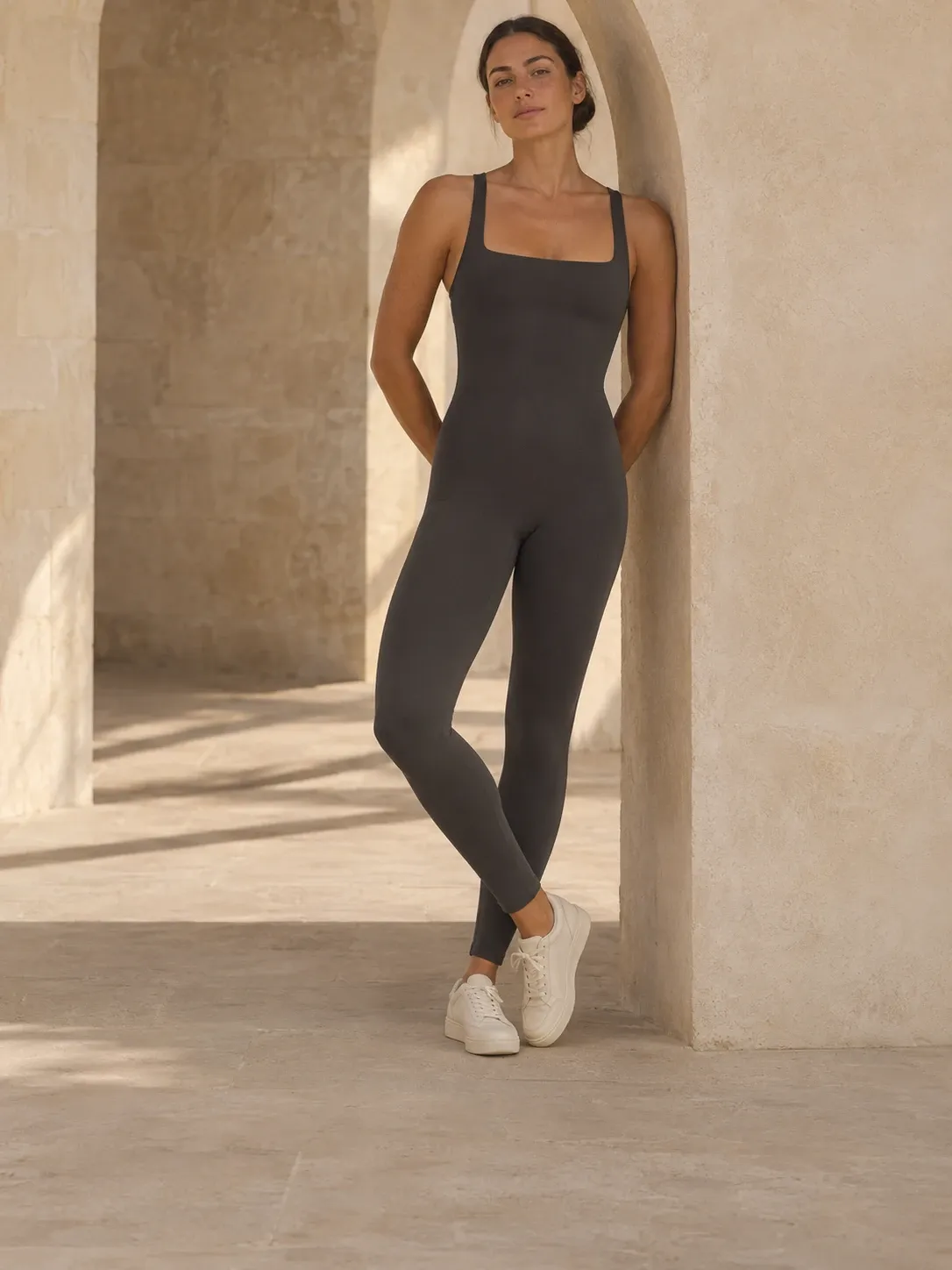
Jumpsuit vs Bodysuit vs Unitard: Activewear One-Pieces
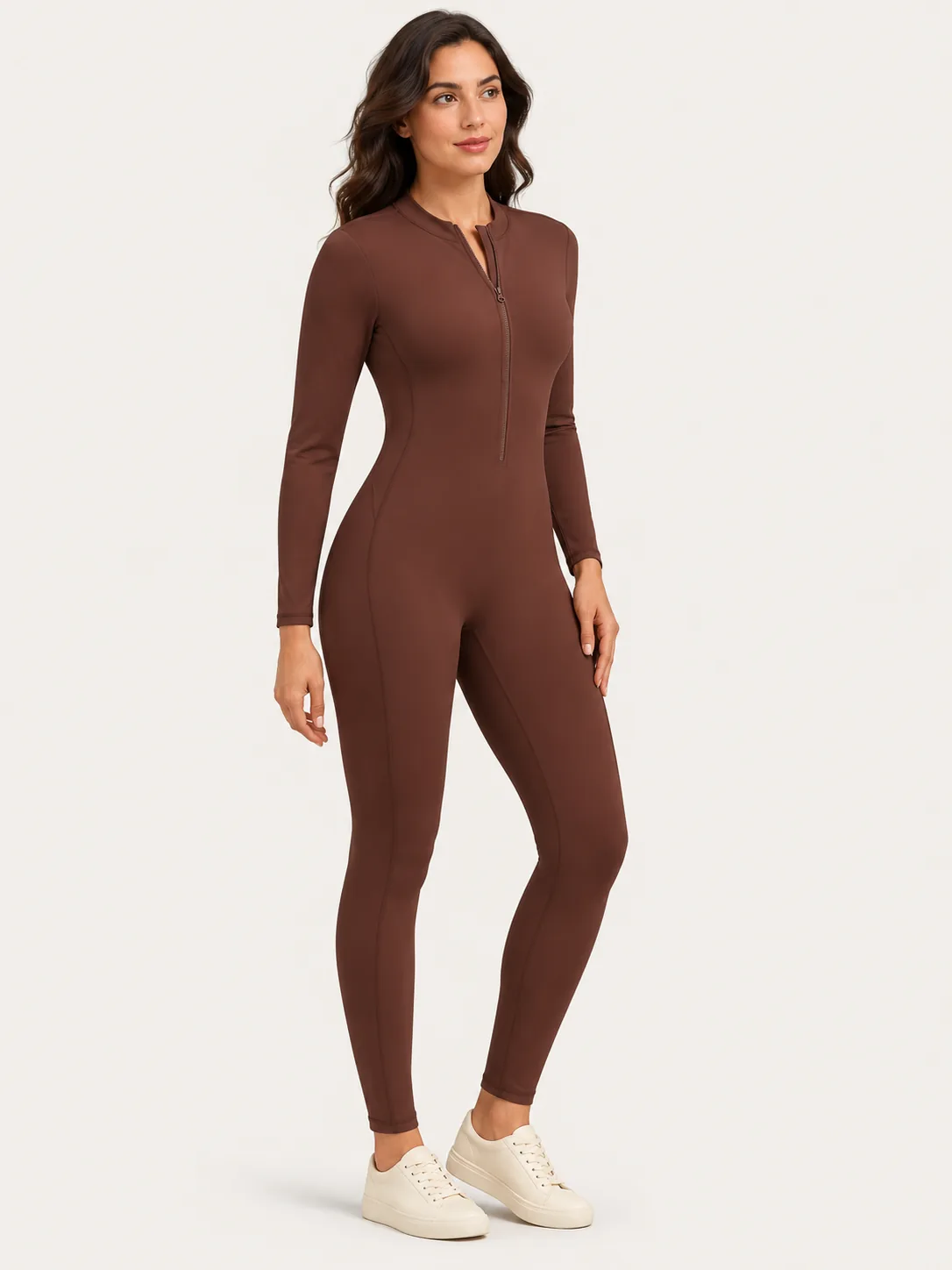
An activewear jumpsuit is a one-piece that combines a top with shorts or leggings, a bodysuit covers the torso and ends at the hips like a leotard, and a unitard is a close-fitting jumpsuit that usually runs to the ankle. All three remove the gap between top and bottom; the key to a good fit is torso length, so check the size guide and consider your height before you order.
What is the difference between a jumpsuit, a bodysuit and a unitard?
These terms are often used loosely, but they describe slightly different garments. Here is how they compare in activewear.
| Type | What it is | Typical use |
|---|---|---|
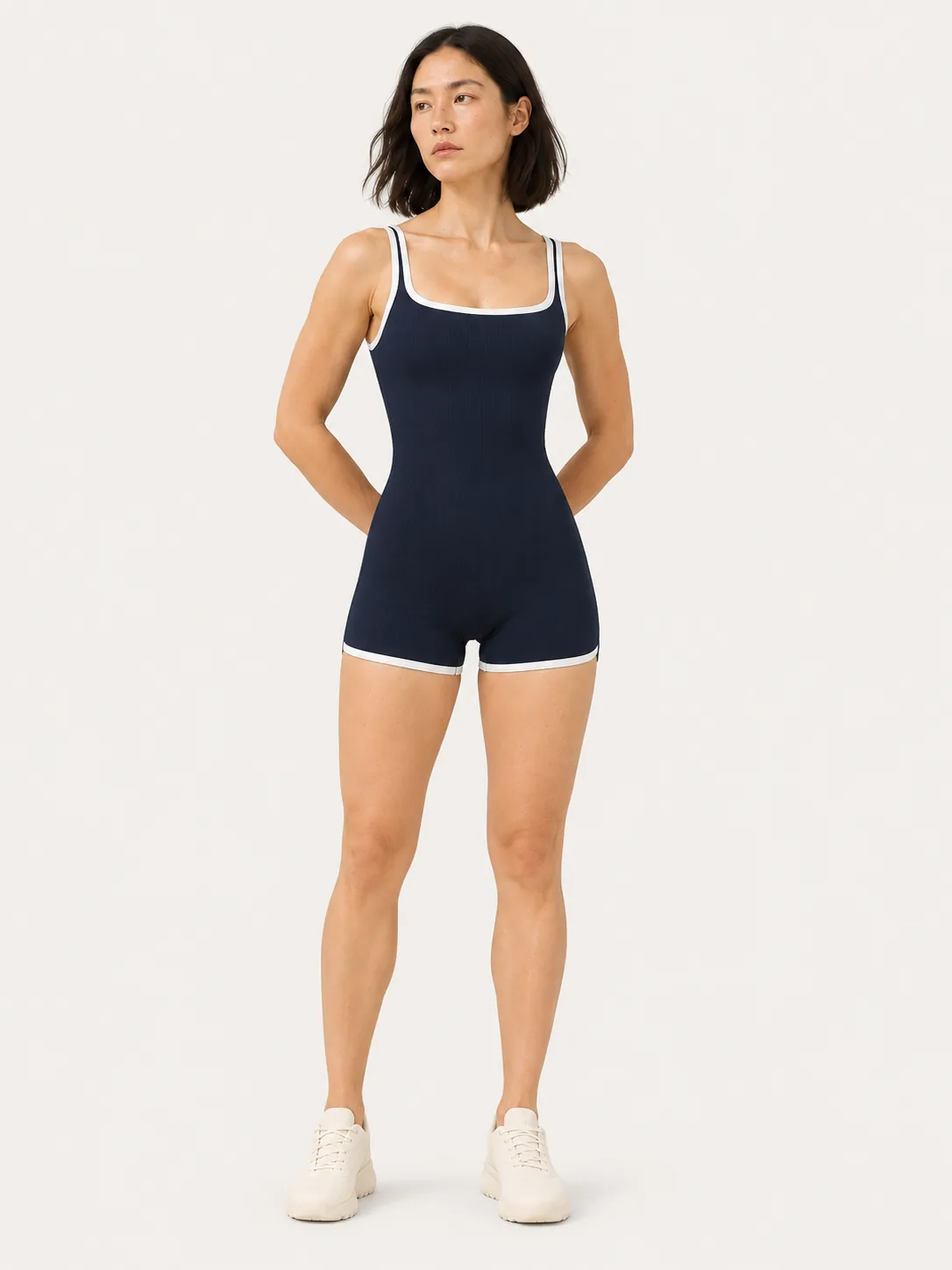
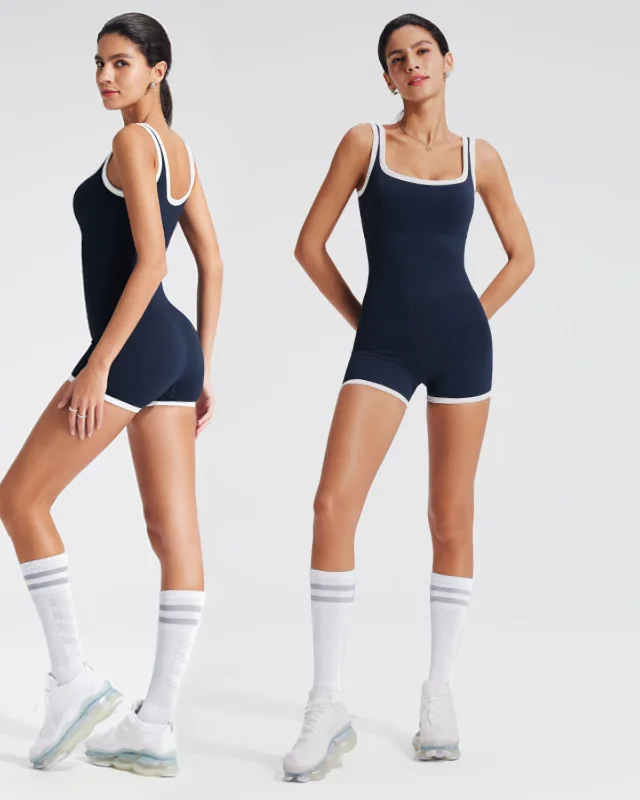
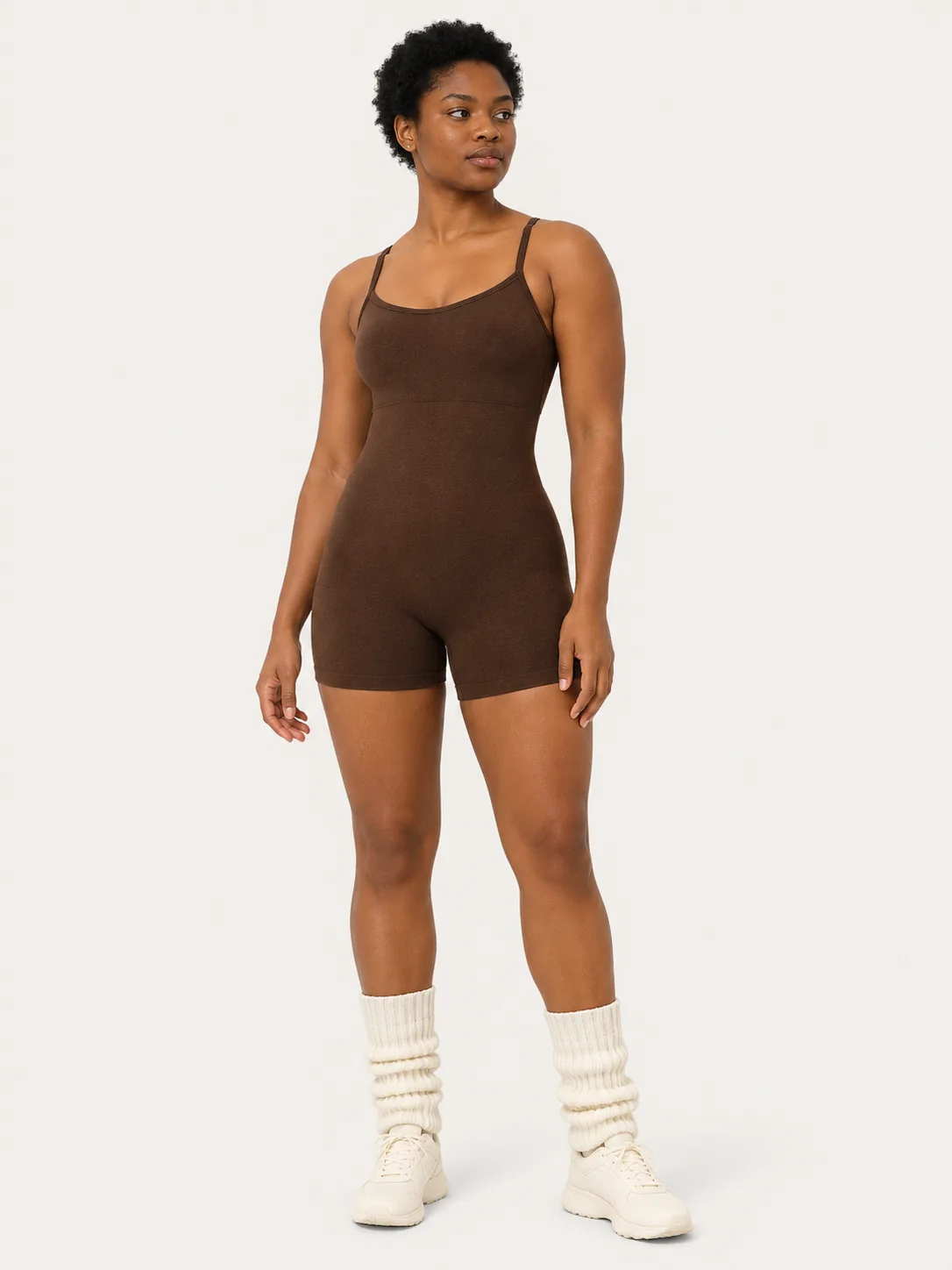
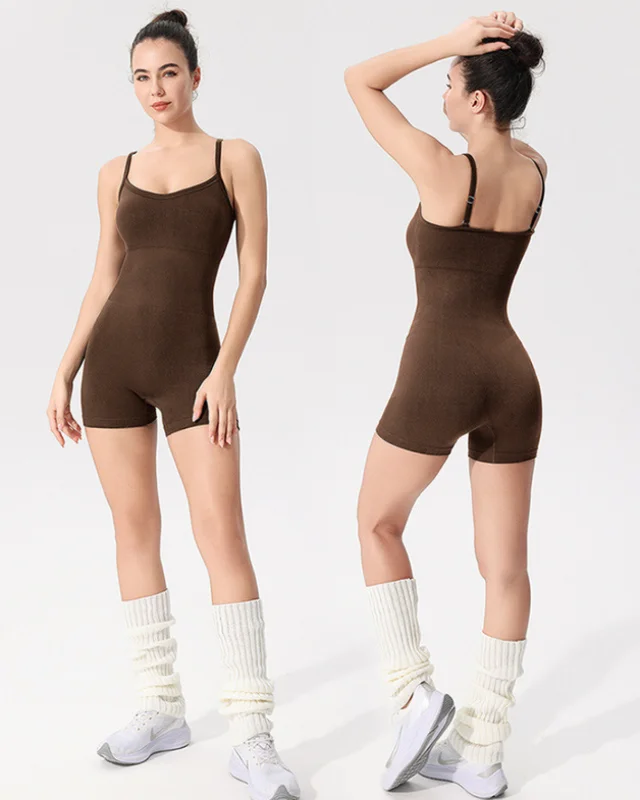
| Jumpsuit (short) | A one-piece top and shorts, often called a romper or playsuit | Yoga, studio classes, warm weather |
| Jumpsuit (long) | A one-piece top and full-length or flared legs | Workouts, travel and everyday outfits |
| Bodysuit | Covers the torso and ends at the hips, like a leotard | Layering under leggings, skirts or jeans |
| Unitard | A close-fitting one-piece that usually runs to the ankle | Dance, barre, Pilates and a sleek studio look |
Why choose a one-piece instead of a set?
A one-piece means there is no waistband to roll, no top to ride up and no gap at the middle when you stretch or bend. It is also the quickest outfit to put on: one piece, and you are dressed.
A set gives you more flexibility, because you can wear the top and bottom separately and size each area more easily. If you like a clean, uninterrupted line, choose a one-piece. If you like mixing pieces, a matching set may suit you better. Our jumpsuit range has more than 70 styles in both seamless and cut & sew fabrics.
Short or long: which length should you choose?
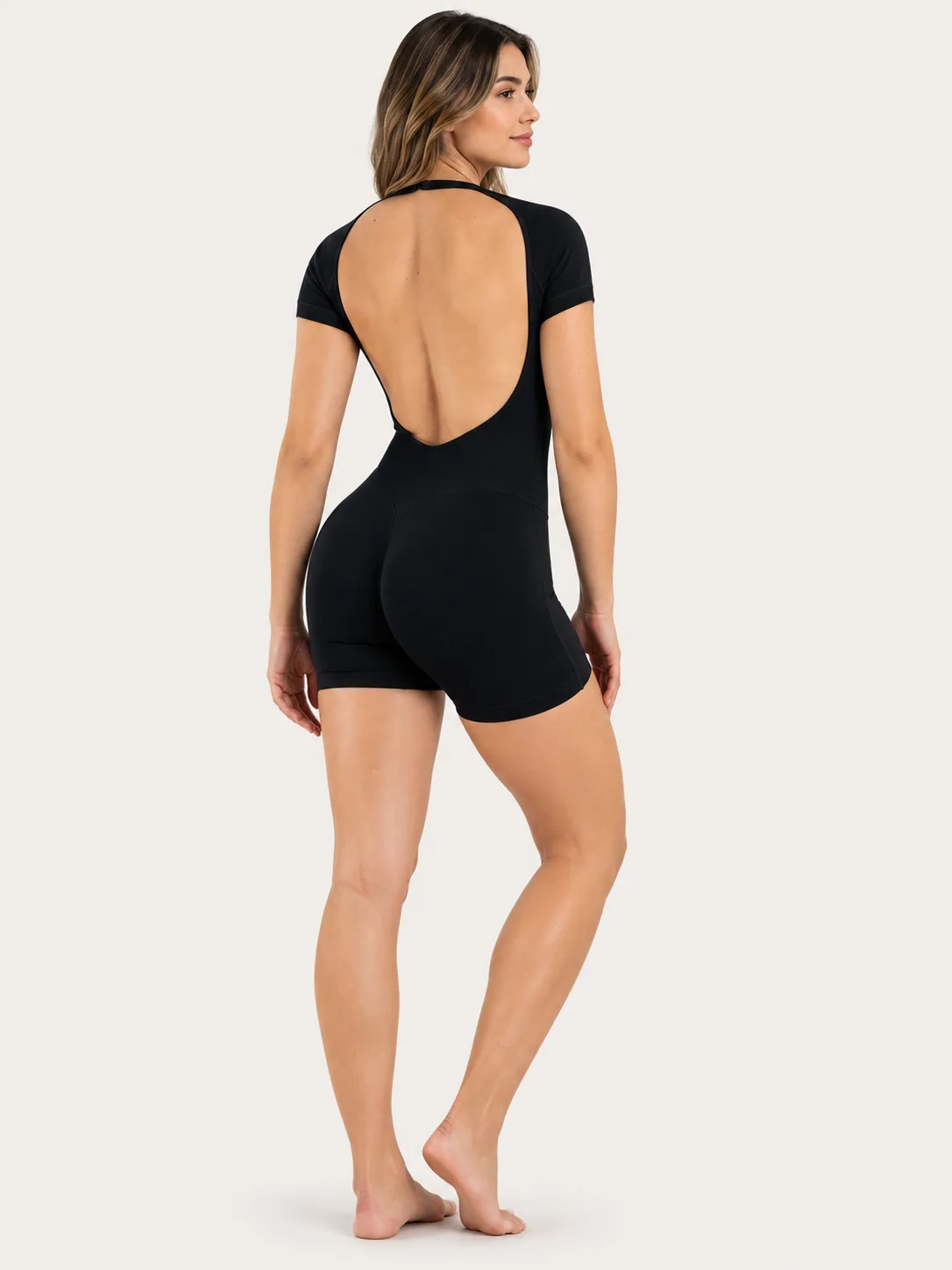
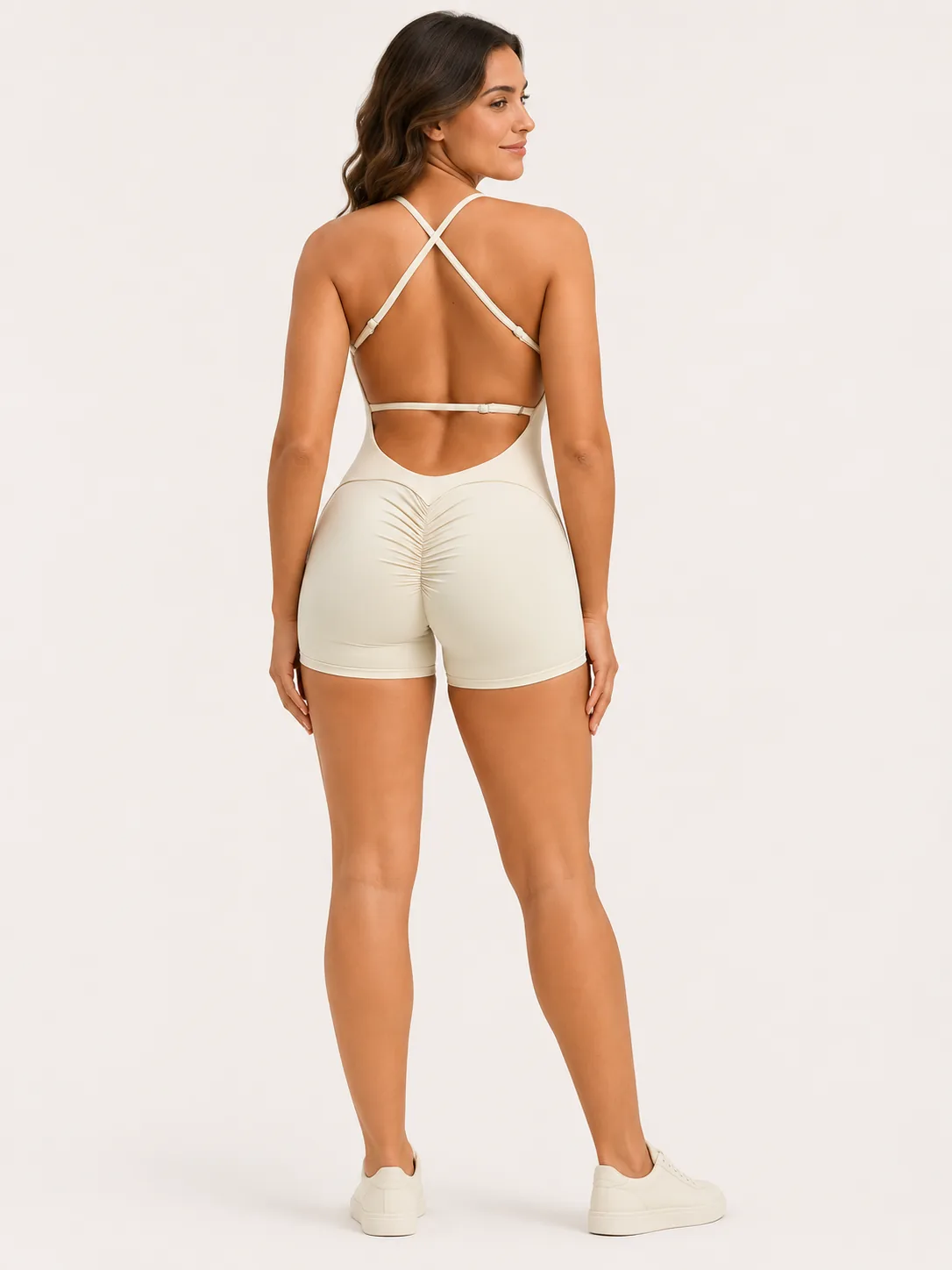
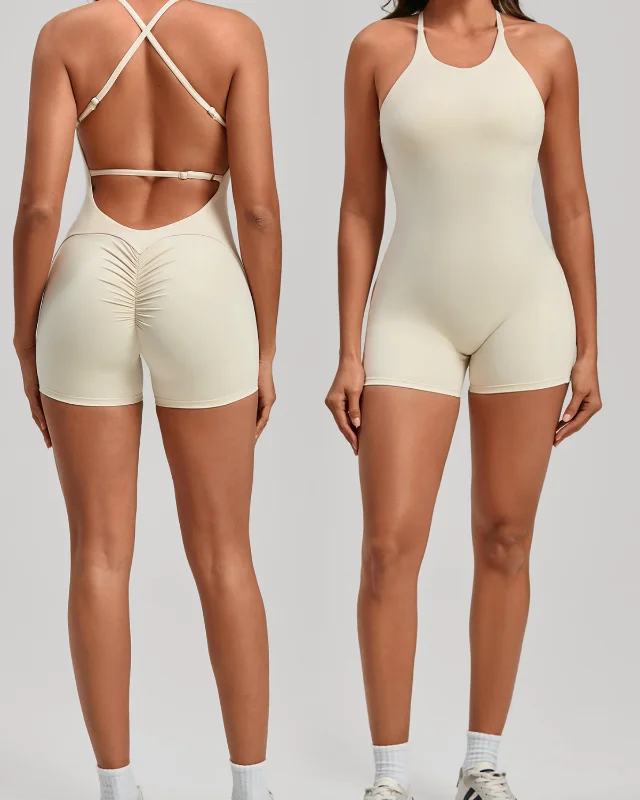
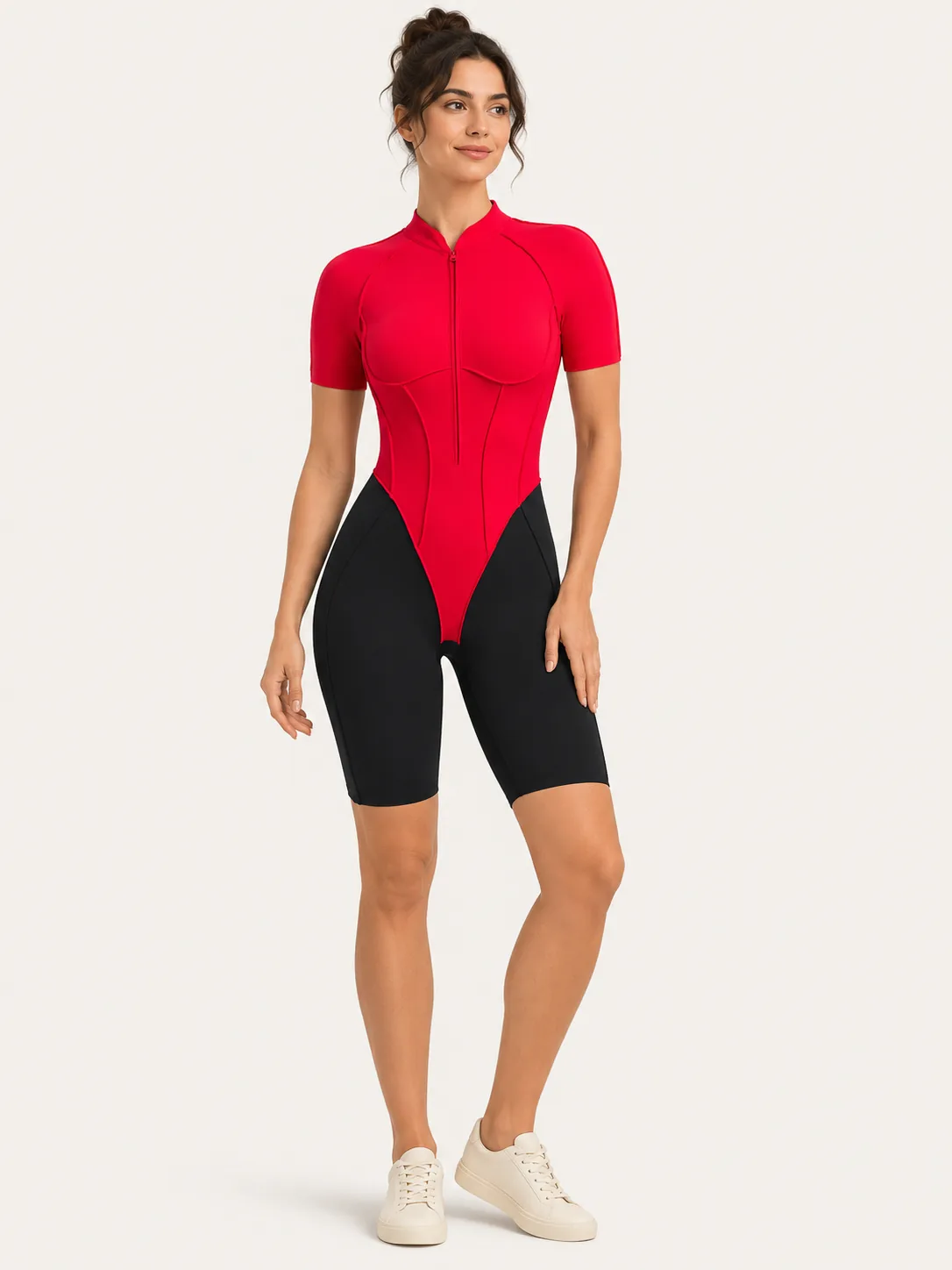
Short jumpsuits end at the upper or mid-thigh, like bike shorts. They are light and easy to move in, and they suit hot days, studio classes and holidays. Long jumpsuits run to the ankle and feel more like a complete outfit. Flared and wide-leg versions are fitted through the hip and open at the hem, which makes them easy to wear with trainers or sandals as everyday athleisure.
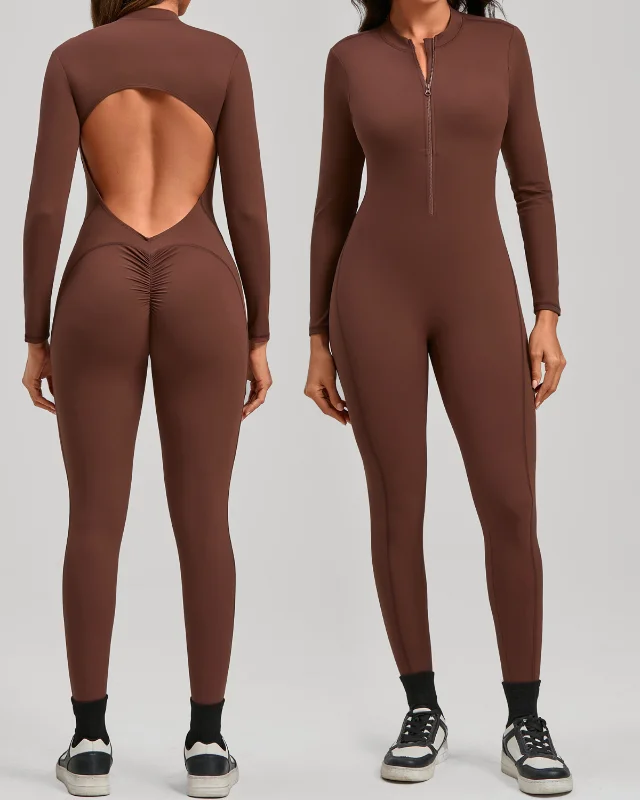
For cooler days, a long-sleeve jumpsuit adds coverage on the arms without needing an extra layer.
Which backs and necklines are there?
The back and neckline give a one-piece most of its character, and they also affect how easy it is to get in and out of.
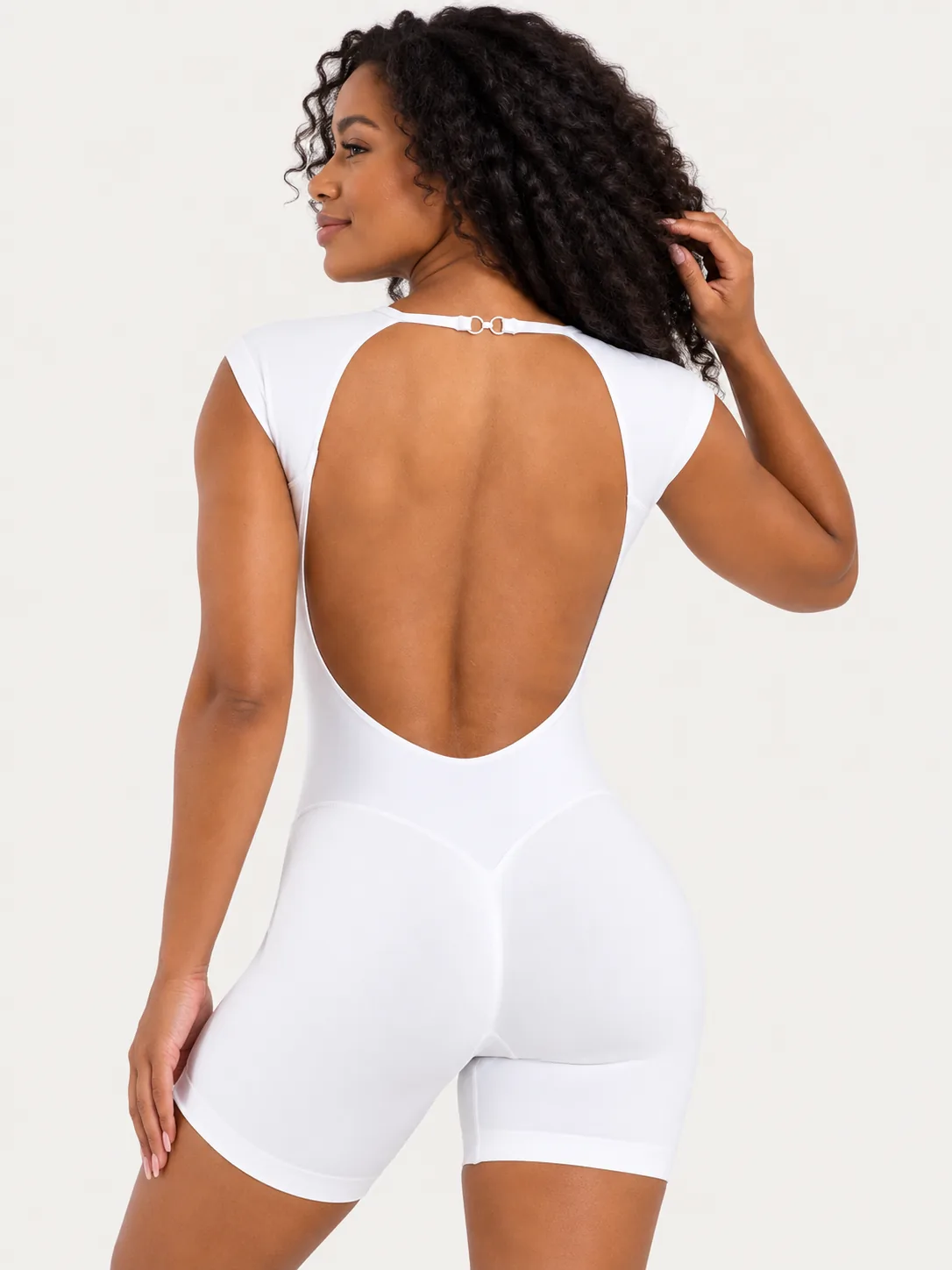
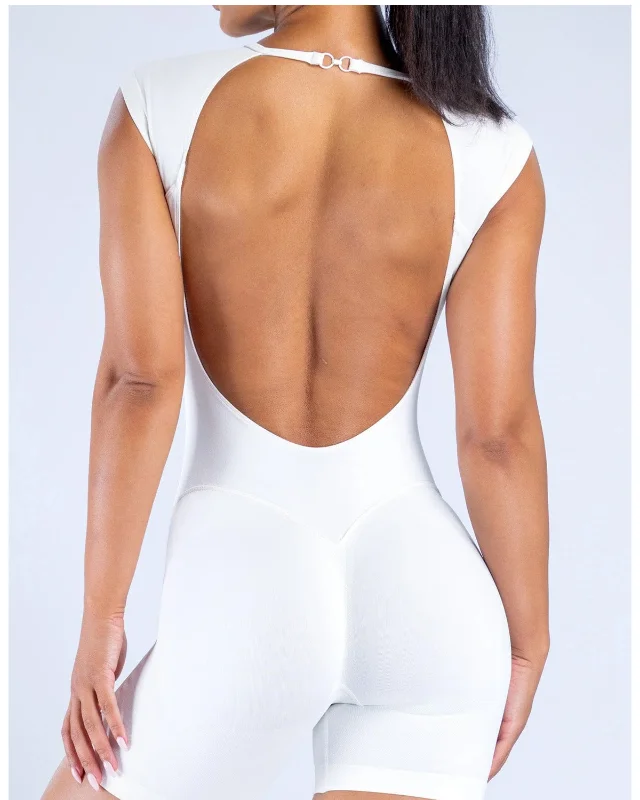
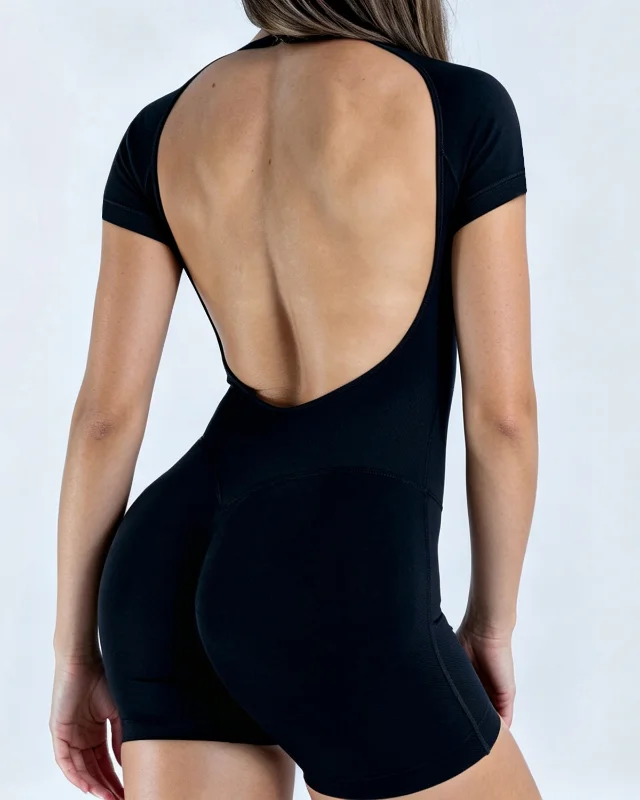
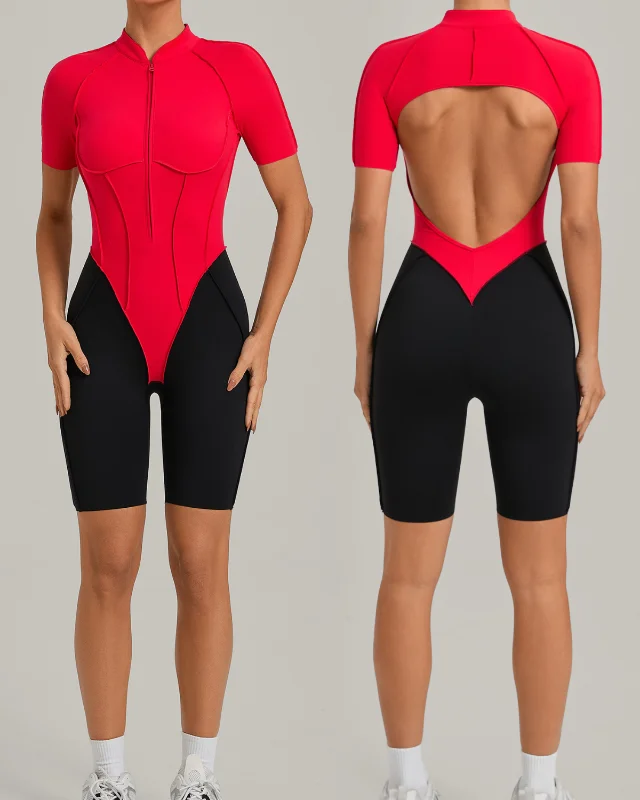
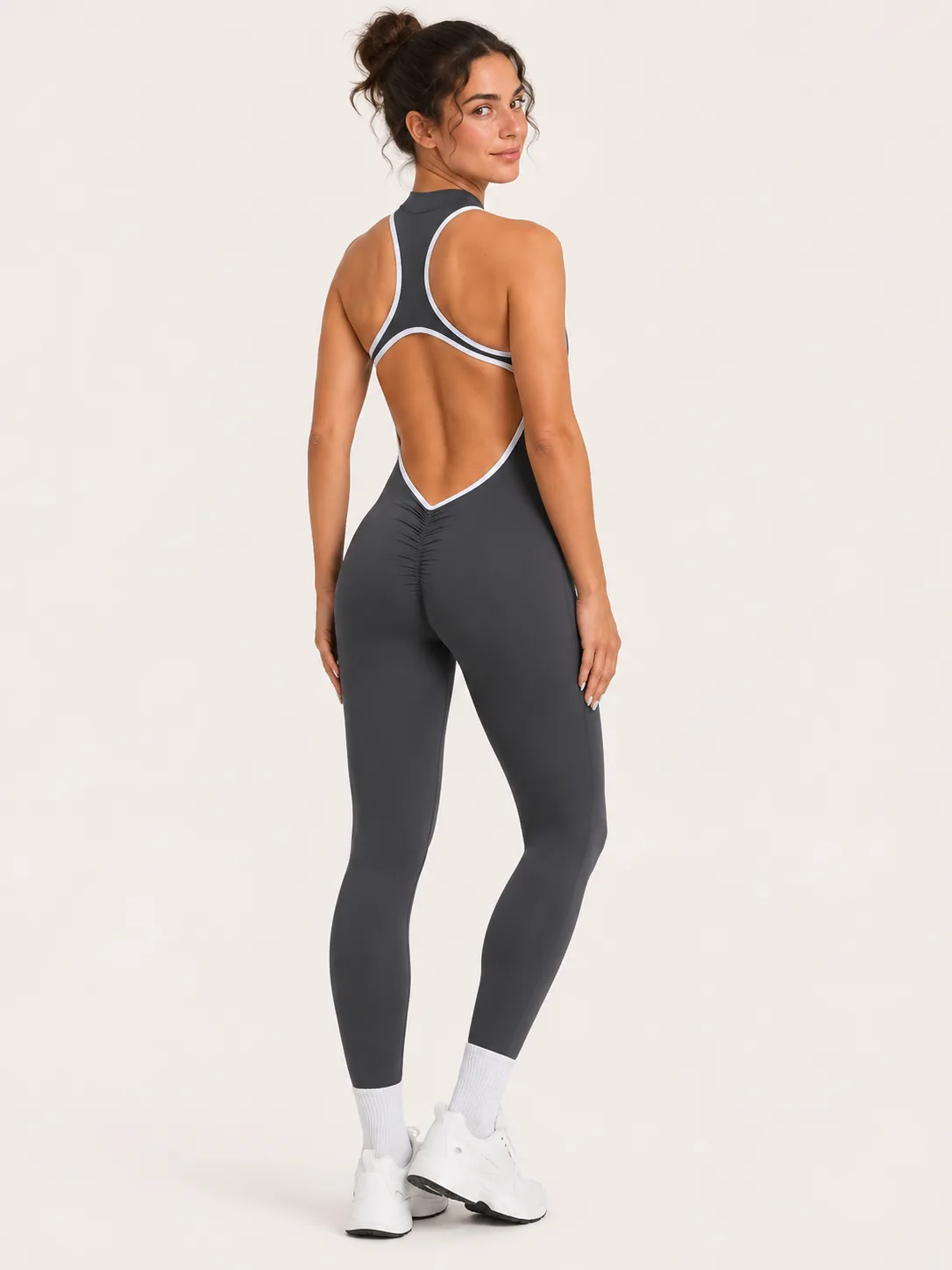
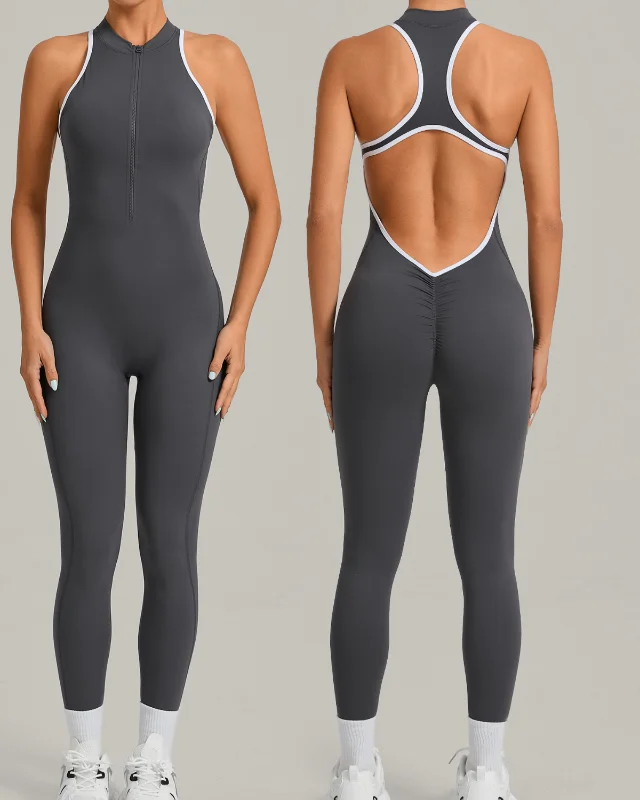
- Open or backless: a low back for a striking look; you may want to check whether you can wear a bra underneath.
- Cross or criss-cross back: straps cross between the shoulder blades and tend to stay put on the shoulders.
- Halter neck: the straps go around the neck, giving a high front neckline.
- Scoop or square neck: a simple, classic shape that works with layers.
- Zip front: a half or full zip makes the piece easier to put on and take off, and lets you adjust the neckline.
How do you size a jumpsuit or bodysuit?
A one-piece has to fit your torso and your hips at the same time, so torso length matters as much as your usual size. If the body is too short, you will feel the straps pulling down on your shoulders or the fabric pulling at the crotch. If it is too long, the fabric may bunch at the waist.
Use the hip and waist measurements in our size guide first. Then think about your height: if you are tall for your size or have a long torso, consider sizing up. If you are petite, your usual size is often the best starting point. Stretchy fabrics give some room either way.
What practical tips help when wearing a one-piece?
One-pieces are easy to love, but a little planning makes them easier to live with.
- Bathroom breaks: most one-pieces need to come off the shoulders, so zip-front and easy-strap styles are quicker.
- Layering: add an oversized shirt, a cropped sweatshirt or a zip jacket over the top to take it from studio to street.
- Underneath: many activewear one-pieces are designed to be worn without a separate top; check the product page for built-in pads.
- Getting dressed: step in feet first and roll the fabric up, rather than pulling hard on the straps.
- Care: wash in cool water and air dry to help the fabric keep its stretch.
Questions and answers
Is a bodysuit the same as a jumpsuit?
No. A bodysuit ends at the hips like a leotard, while a jumpsuit has legs, either short or long.
What is a unitard?
A unitard is a close-fitting one-piece that covers the torso and legs, usually to the ankle. It is popular for dance, barre and Pilates.
How do I know if a jumpsuit is too short in the body?
If the straps pull down on your shoulders or the fabric pulls at the crotch when you stand up straight, the torso is probably too short. Try the next size up.
Can I wear a bra under an activewear jumpsuit?
It depends on the style. Some have built-in pads and are made to be worn alone; open-back styles may not suit a regular bra. Check the product description.
Should I size up in a jumpsuit if I am tall?
Often, yes. If you are tall for your size or have a long torso, the next size up usually gives more length through the body.
Shop: Jumpsuits · Yoga Sets · Leggings · Find your fit in our size guide · Terms explained in the glossary