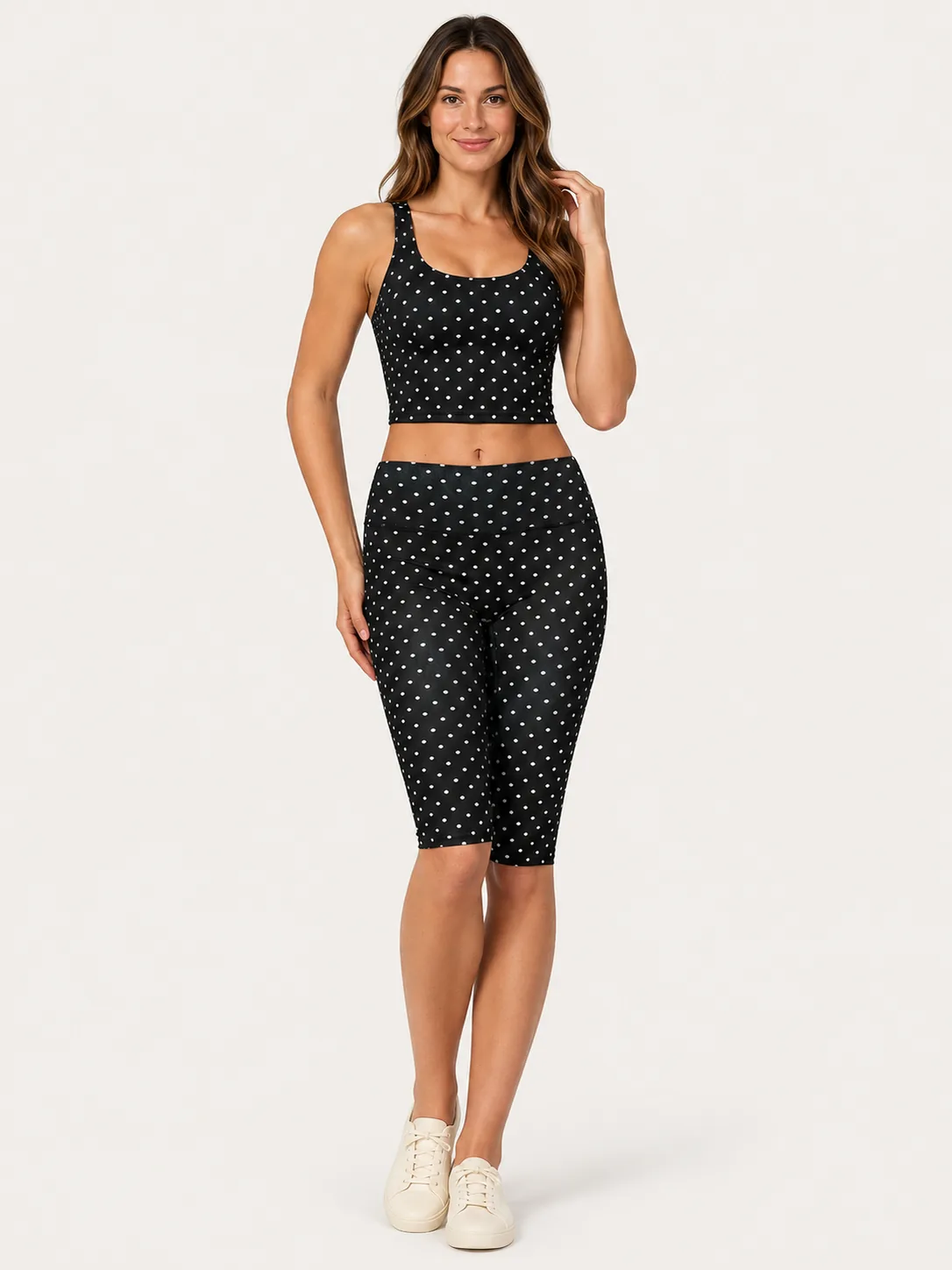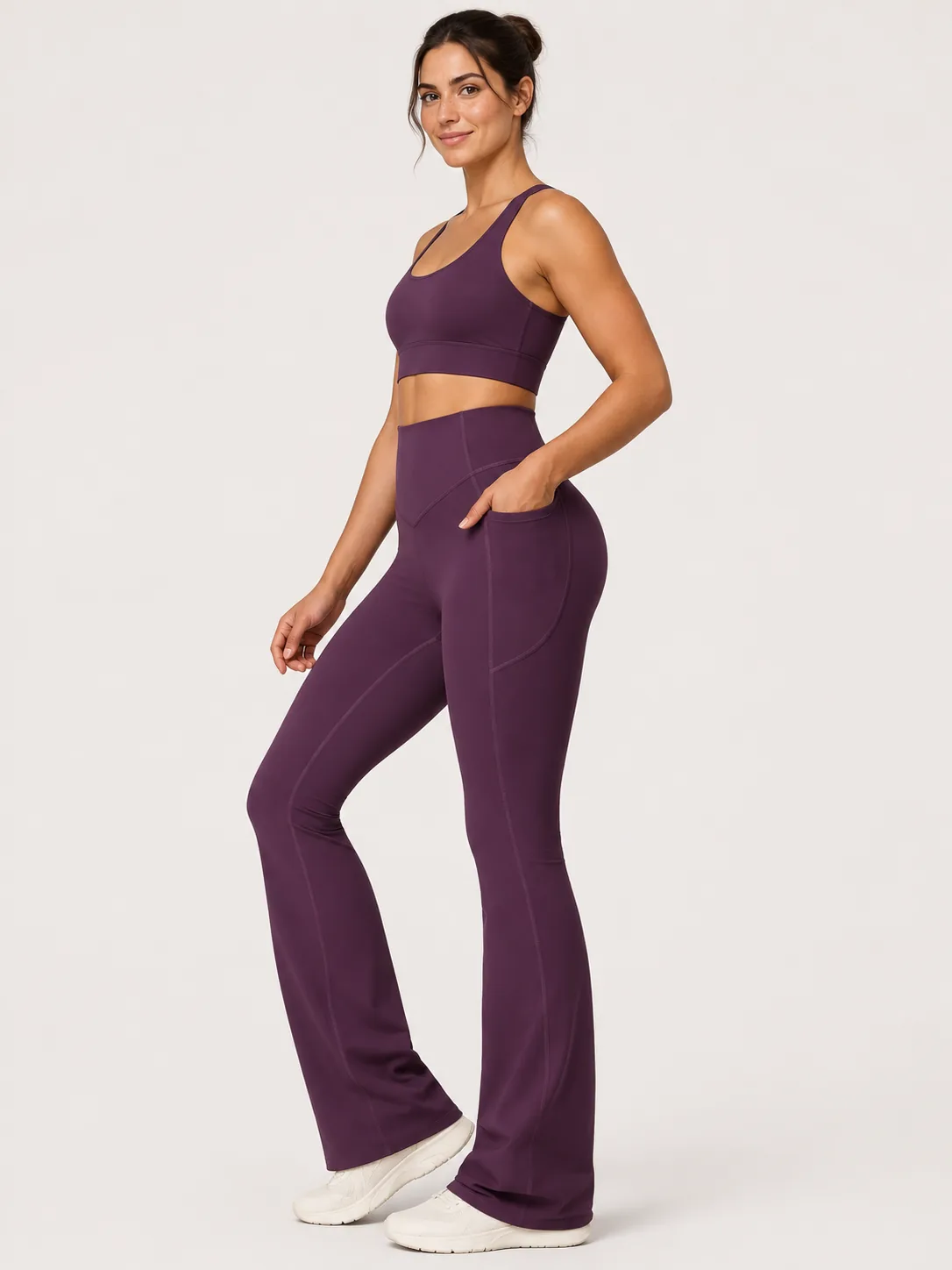
Nylon vs Polyester vs Cotton Activewear: Which Fabric?
Nylon is a smooth, soft, strong synthetic fiber; polyester is a durable synthetic that holds its shape and dries relatively fast; cotton is a soft natural fiber that absorbs moisture and dries slowly. In activewear these are usually blended with spandex, and the spandex percentage tells you how stretchy the fabric is: around 20 to 25% feels very stretchy and hugging, around 10% feels lighter with less stretch.
What is the difference between nylon and polyester?
Both are synthetic fibers, and both are widely used in activewear because they are strong, lightweight and take stretch well when blended with spandex. The differences are mostly about feel and handling.
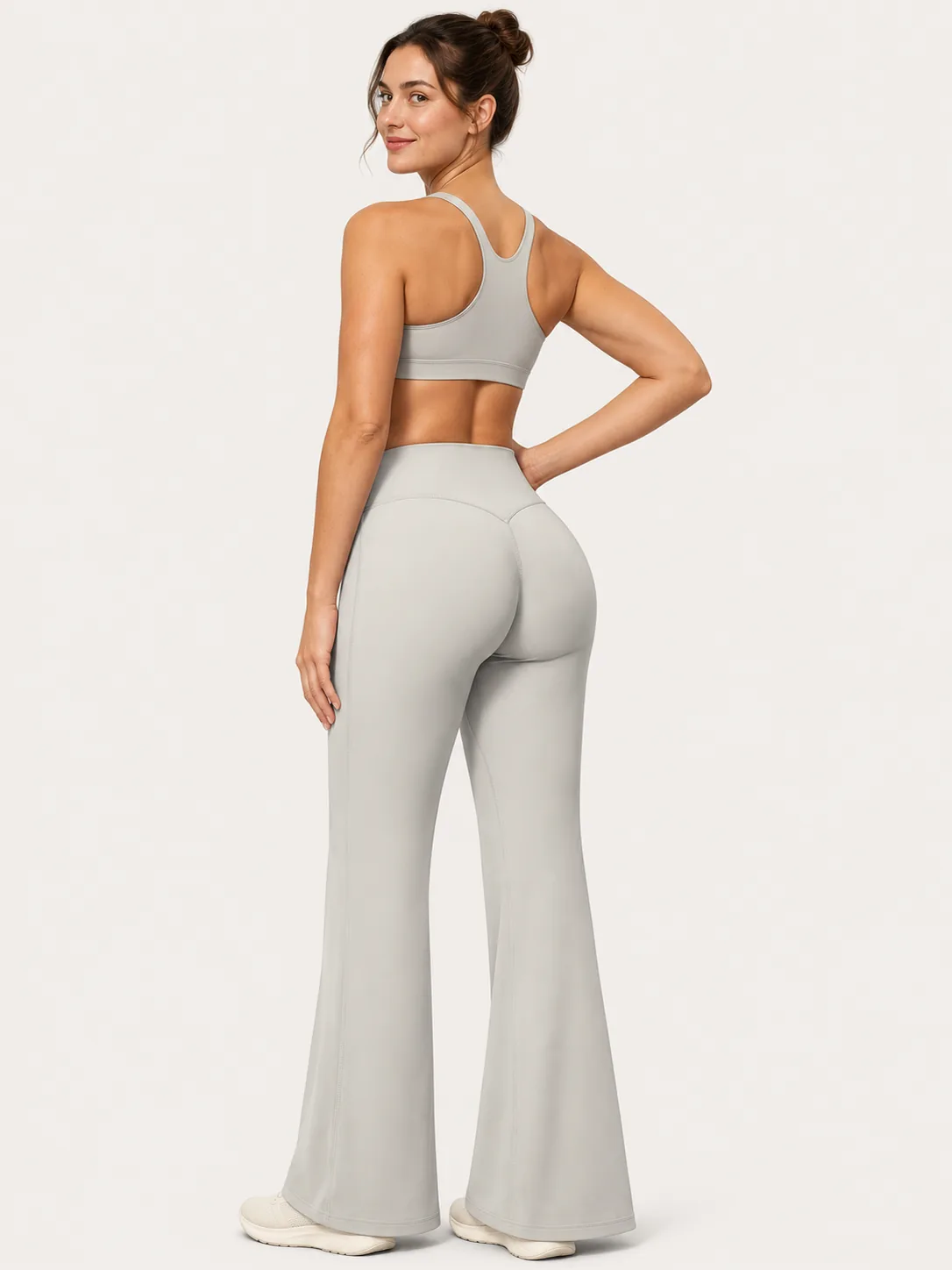
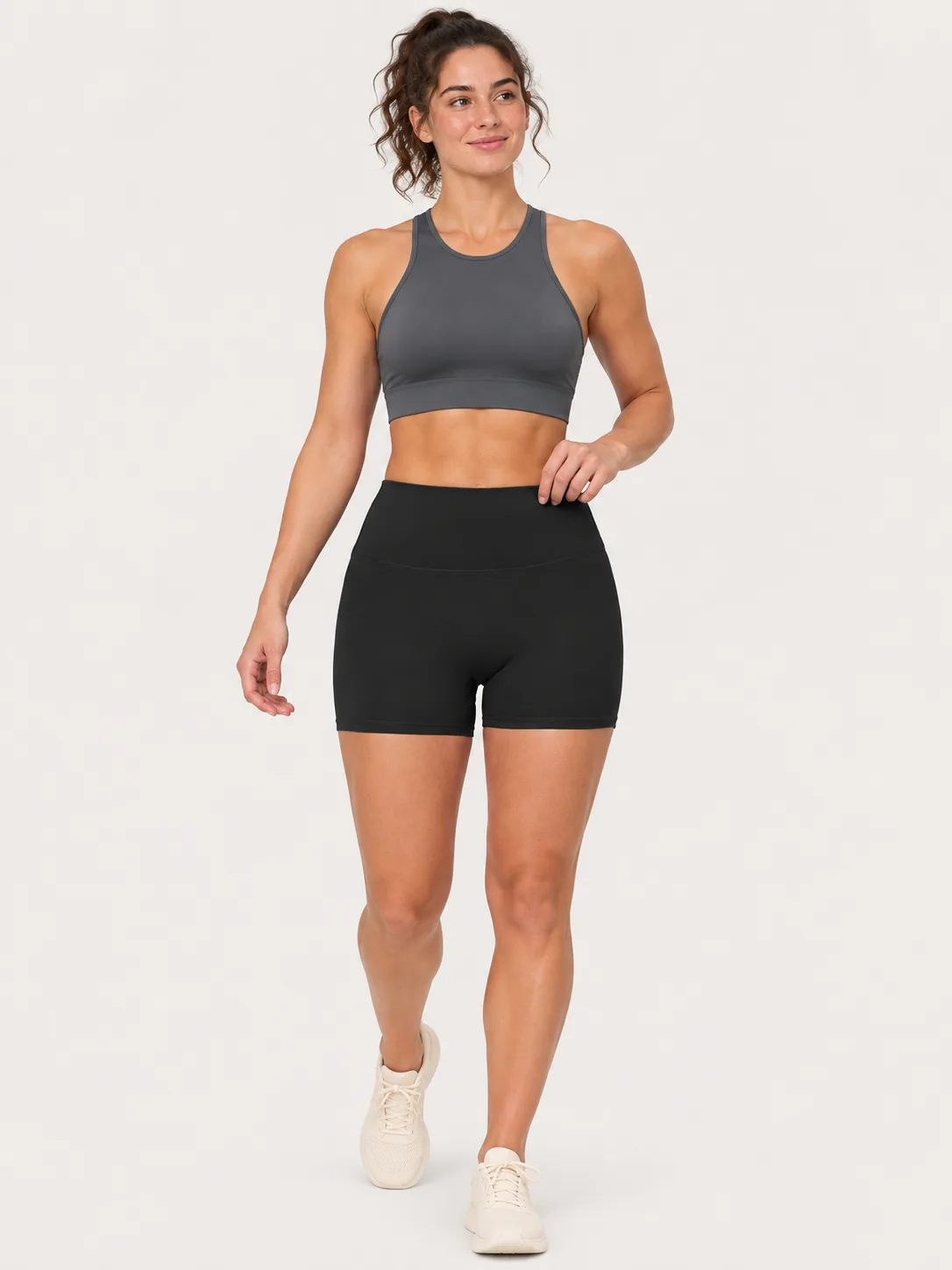
Nylon (sometimes listed as polyamide) tends to feel smoother, softer and slightly cooler to the touch, with a gentle drape. It is very strong for its weight, which is why it is common in leggings and sports bras. Polyester tends to feel a little crisper, holds its shape and color well, and dries relatively fast. It is common in swimwear, training tees and shorts, and in printed fabrics.
Where does cotton fit in?
Cotton is a natural fiber with a soft, familiar feel. It absorbs moisture rather than letting it pass through, so it can feel heavy and take longer to dry after a sweaty session. That makes it a good fit for relaxed wear, lounging, joggers and tees, and less common in leggings and sports bras.
You will often see cotton blended with polyester, which combines cotton's softness with polyester's shape retention, or with a little spandex for stretch.
| Nylon | Polyester | Cotton | |
|---|---|---|---|
| Fiber type | Synthetic | Synthetic | Natural |
| Typical feel | Smooth, soft, slightly cool | Slightly crisper, light | Soft, matte, familiar |
| With moisture | Absorbs little; dries fairly quickly | Absorbs very little; dries relatively fast | Absorbs moisture; dries slowly |
| Shape retention | Good, especially blended with spandex | Very good | Can stretch out or shrink without care |
| Common uses | Leggings, sports bras, yoga sets, swimwear | Swimwear, training tees, shorts, prints | Joggers, tees, lounge and relaxed wear |
| Care | Cold wash, avoid high heat | Cold or warm wash, avoid high heat | Follow the care tag; may shrink in heat |
What does the spandex percentage change?
Spandex, also called elastane, is a highly elastic fiber. It is almost never used alone; a small share blended with nylon or polyester gives the fabric stretch and recovery, meaning it springs back after being pulled.
As a general guide, a higher spandex share makes fabric feel stretchier and more hugging, and a lower share makes it lighter and less snug. Fabrics with around 20 to 25% spandex are common in leggings and sports bras that sit close to the body. Fabrics with around 10% spandex often feel lighter and are typical of seamless knits. Garments with little or no spandex rely on the cut for fit rather than on stretch.
- About 25 to 30% spandex: very stretchy, close-fitting feel.
- About 15 to 22% spandex: stretchy but a little less snug, a popular middle ground.
- About 5 to 12% spandex: lighter, softer, less snug; common in seamless knits and tees.
- 0% spandex: stretch comes only from the knit or the cut.
How do I read a fabric line like 75% Nylon, 25% Spandex?
A fabric line lists each fiber by its share of the fabric's weight, usually largest first, and the numbers add up to 100%. So 75% Nylon, 25% Spandex means three quarters of the fabric by weight is nylon and one quarter is spandex. That tells you the base fiber (nylon, so a smooth feel) and the stretch level (a high spandex share, so plenty of stretch).
The fabric line does not tell you everything. Two fabrics with the same blend can differ in thickness, knit and finish, such as brushed or ribbed. Look at the product description and photos for those details, and see our guide to checking whether leggings are see-through for opacity tips.
What fabrics does our range use?
Most of our range is nylon-spandex. Of our roughly 2,930 styles, more than 2,500 use a nylon-spandex blend. The most common line, 75% Nylon, 25% Spandex, appears on about 1,370 styles, followed by 78% Nylon, 22% Spandex on about 550 and 90% Nylon, 10% Spandex on about 350.
A smaller group of a little over 200 styles uses polyester or polyester-spandex, such as 100% Polyester or 85% Polyester, 15% Spandex, and a few dozen use cotton or cotton blends. The exact fabric line is shown on every product page, so you can compare before you choose.
Questions and answers
Is nylon or polyester better for leggings?
Both work well. Nylon blends usually feel smoother and softer, while polyester blends are very shape-stable and dry relatively fast, so choose by the feel you prefer.
Is spandex the same as elastane?
Yes. Spandex and elastane are two names for the same stretchy synthetic fiber; US labels tend to say spandex and UK and EU labels elastane.
Is cotton good for workouts?
Cotton is comfortable for light activity and everyday wear, but it absorbs moisture and dries slowly, so many people prefer synthetic blends for sweaty sessions.
What does 90% Nylon, 10% Spandex feel like?
It usually feels lighter and less snug than a 75/25 blend, with gentler stretch. It is a common blend for seamless knits.
Shop: Leggings · Yoga Sets · Menswear · Find your fit in our size guide · Terms explained in the glossary